Should You Vacuum Seal Items in a Go-Bag?
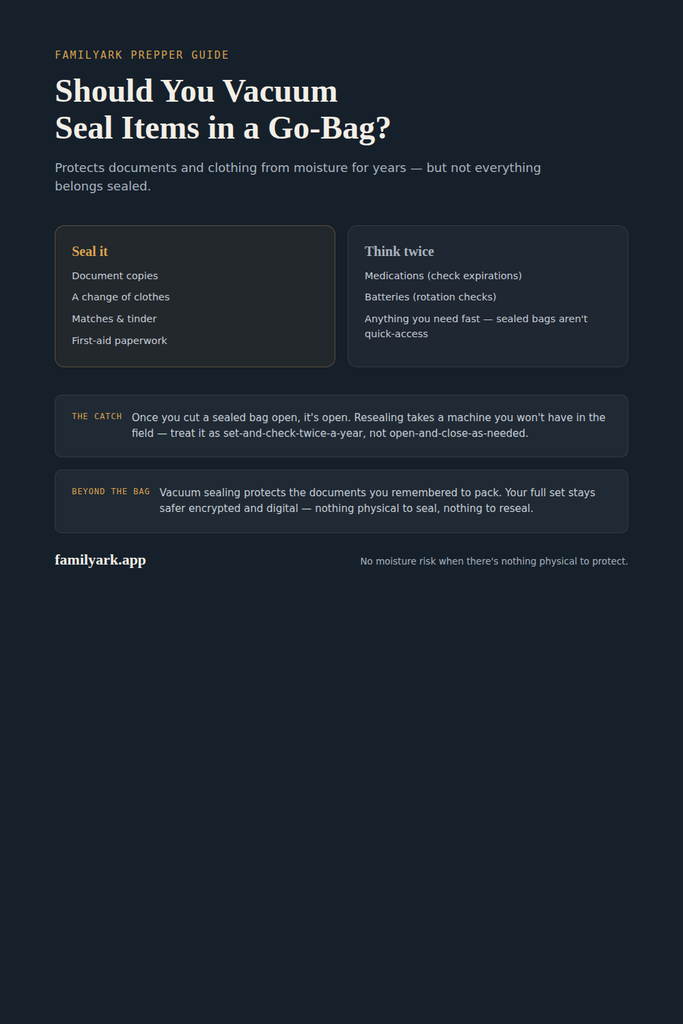
Yes for documents, clothing, and anything paper-based — vacuum sealing is one of the most effective ways to protect them from moisture, mold, and mildew in a bag that might sit packed for months or get soaked in the field. No, or at least not without thinking it through, for anything you need to check, rotate, or access regularly, like medications or batteries — a broken seal means re-sealing, which most people can’t do on the spot.
What vacuum sealing actually protects against
The core benefit is moisture control, and it matters more than people expect. A go-bag isn’t stored in a climate-controlled closet forever — it gets carried through rain, left in a trunk through humid summers, or used exactly when weather is at its worst. Vacuum sealing removes the air (and the moisture in it) that causes paper to warp, ink to run, mold to grow on fabric, and metal to rust. It also compresses bulky items like clothing down to a fraction of their normal size, which matters when every inch of pack space counts.
What’s worth vacuum sealing
- Document copies. Photocopies of IDs, insurance policies, and other paperwork — sealed, they’re essentially immune to the water damage that destroys loose paper.
- A change of clothes. Vacuum-sealed clothing stays dry, compact, and — as more than one prepper has pointed out — comes out looking and smelling like it did the day you packed it, not like it’s been sitting in a bag for a year.
- Fire-starting materials. Matches, tinder, and anything else that needs to stay bone-dry to work.
- A first-aid kit’s paper contents — instructions, information cards — though the medical supplies themselves need separate consideration (see below).
What needs more thought before you seal it
- Medications. These usually need periodic checking for expiration dates, and some have specific storage requirements (temperature-sensitive ones especially). Sealing them in with everything else makes it easy to forget they’re there until it’s too late to replace them in time.
- Batteries. Some sealed storage advice specifically flags batteries as worth keeping separate, since damaged or swelling batteries can be a real hazard in a sealed environment, and you’ll want to check them on your regular rotation schedule anyway.
- Anything you’ll need to grab in a hurry without cutting a bag open. A vacuum-sealed bag is not a quick-access bag — opening one properly (and re-sealing it) takes a few minutes and, in most cases, a machine you won’t have with you.
The real tradeoff: resealing
This is the part most guides skip. Once you cut a vacuum-sealed bag open to rotate contents or check on something, it’s open — resealing it requires a vacuum sealer, which most people don’t carry into the field. The practical approach is to treat vacuum-sealed items as set-and-check-twice-a-year, not open-and-close-as-needed: seal them properly at home, note the date, and build the reseal into the same six-month review where you’d already be checking IDs and prescriptions for your bug-out bag document checklist.
The better answer for your full document set
Vacuum sealing solves the physical-paper problem well, but it’s worth being honest about its limits: it protects a handful of pre-selected documents you remembered to gather and seal ahead of time. It does nothing for everything else — the documents that never made it into the bag, or that you’d need in a different situation entirely.
This is where a physical, sealed copy and a digital one solve different problems rather than competing. FamilyArk stores your full set of documents encrypted and local on your device — no moisture risk, no size limit, no resealing required, because there’s nothing physical to seal in the first place. The vacuum-sealed folder in your bag is for the small, specific set of documents you’d need in hand during an evacuation; the encrypted vault is for everything else, sitting safely on a device rather than depending on a bag surviving intact.
Frequently asked questions
Do I need a special vacuum sealer, or will a regular one work? A standard food-grade vacuum sealer works fine for documents and clothing. The bags matter more than the machine — use heavier-duty bags rated for long-term storage rather than thin bags meant for a week in the fridge.
How long do vacuum-sealed documents actually last? Properly sealed with no light or heat exposure, years — but “properly” is doing some work in that sentence. Store the sealed bag somewhere cool and dark, not in direct sun or a hot car trunk, for the seal’s protection to hold up over time.
Should I laminate documents before vacuum sealing them, or is one enough? Both together is the most durable combination — lamination protects against tearing and everyday handling, vacuum sealing protects against moisture and long-term storage. For documents you’ll actually pull out and use in the field, doing both is worth the extra few minutes.
What about food and water in a go-bag — same vacuum-sealing advice? Food storage has its own set of rules (some foods vacuum-seal well, others need specific conditions to avoid spoilage risk), which is really a separate topic from documents and gear — worth researching specifically for whatever you’re packing rather than assuming the same approach applies.